OEM vs ODM Gym Equipment: Which Model Fits Brand Growth
Sep 16, 2026
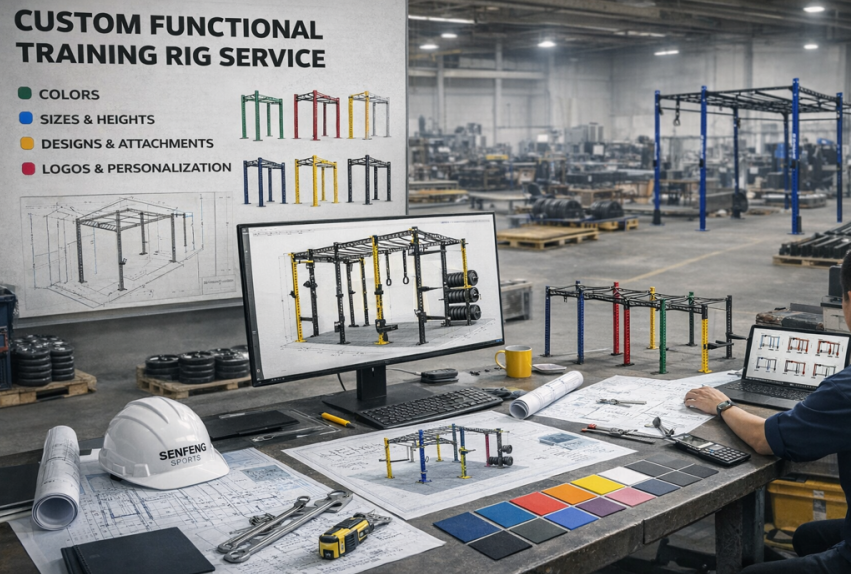
Nantong, Jiangsu Sep 15, 2026 (Issuewire.com) - Ask three gym-equipment brands how they got their first products made, and the answers rarely match. One licensed a factory's existing design and shipped within weeks. Another handed over its own drawings and waited months for tooling. A third started with the first approach and later switched to the second. All three were right for their moment. That divergence sits at the heart of the OEM vs ODM gym equipment decision, and it trips up more newcomers than any pricing question. Both routes produce branded products, but they hand very different responsibilities to the brand owner. Understanding the split early saves money, time, and a fair amount of frustration. Manufacturers such as Senfeng (Nantong Senfeng Sports Products Co., Ltd.) run both tracks, covering commercial and home lines from power racks and Smith machines to hex dumbbells and polyurethane barbells, which makes the comparison practical rather than theoretical.
Breaking Down The Terms: Who Holds The Design
The cleanest way to separate the two models comes down to one question: who holds the design and the patent?
With OEM, the brand supplies the drawings and sets the specifications. The factory builds exactly to those files. The brand owns the look, the structure, and any intellectual property tied to it. The manufacturer acts as the production arm.
With ODM, the factory offers a finished, proven design. The brand makes light changes such as color, logo placement, or minor trim, then puts the product on the market under its own label. The design ownership stays largely with the maker.
Neither is better in the abstract. OEM gym equipment gives full control and a defensible product identity. ODM gym equipment gives speed and a lower research burden. The right pick depends on where a brand stands and what it wants to protect.
Matching The Model To Your Growth Stage
Growth stage is the most useful filter here.
A startup or a regional dealer usually needs new products on the shelf fast, without sinking capital into engineering. ODM fits this well. Take machines from the strength range: a Lat Pull Down, a Smith Machine, or a standard Power Rack already exist as mature designs. Rebranding them with a new color and a logo is quick, and the tooling is already proven. A distributor facing an urgent order can rely on ODM to keep a shipment on schedule.
A brand entering its growth phase, building its own intellectual property, tends to lean the other way. Here OEM makes sense. Locking down a supply chain and owning a distinct product design builds a barrier that competitors cannot simply copy off a catalog. Free-weight items illustrate the point. Hex dumbbells and polyurethane barbells often carry brand-specific grip shapes, weight markings, and finishes, so these usually call for drawing-based, deeply customized production rather than a quick color swap.
In short, catalog machines suit rebadge-and-adjust ODM work, while signature free-weight and bespoke pieces reward the OEM route.
Senfeng's Dual-Track Approach
Nantong Senfeng Sports Products Co., Ltd has run OEM and ODM in parallel for more than eight years, which lets a client switch models as the business matures without changing suppliers.
The workflow reflects that flexibility:
- Drawing- and sample-based processing, so a brand can arrive with either a full spec file or a reference product.
- 3D modeling turned around in about three days, useful for checking form and fit before any metal is cut.
- Prototype samples ready in roughly seven to ten days.
- Three rounds of inspection before goods leave the plant.
- A two-hour response window on inquiries.
Because the same dual-track approach serves both models, a customer can begin with an ODM run to test the market, then move to full OEM once volumes and a defined product identity justify it. The transition stays inside one factory, one quality system, one point of contact. That continuity matters more than it sounds, since re-qualifying a new supplier mid-growth burns weeks and risks quality drift.
Where Things Quietly Go Wrong
Both models carry traps worth naming plainly.
On the ODM side, appearance and structural patent ownership is the item people skip. A design supplied by the factory may carry rights the factory keeps. Clarify in writing who owns what before the first order, especially if the product might later anchor a proprietary line. Confusion here surfaces at the worst moment, usually when a brand tries to move that design elsewhere.
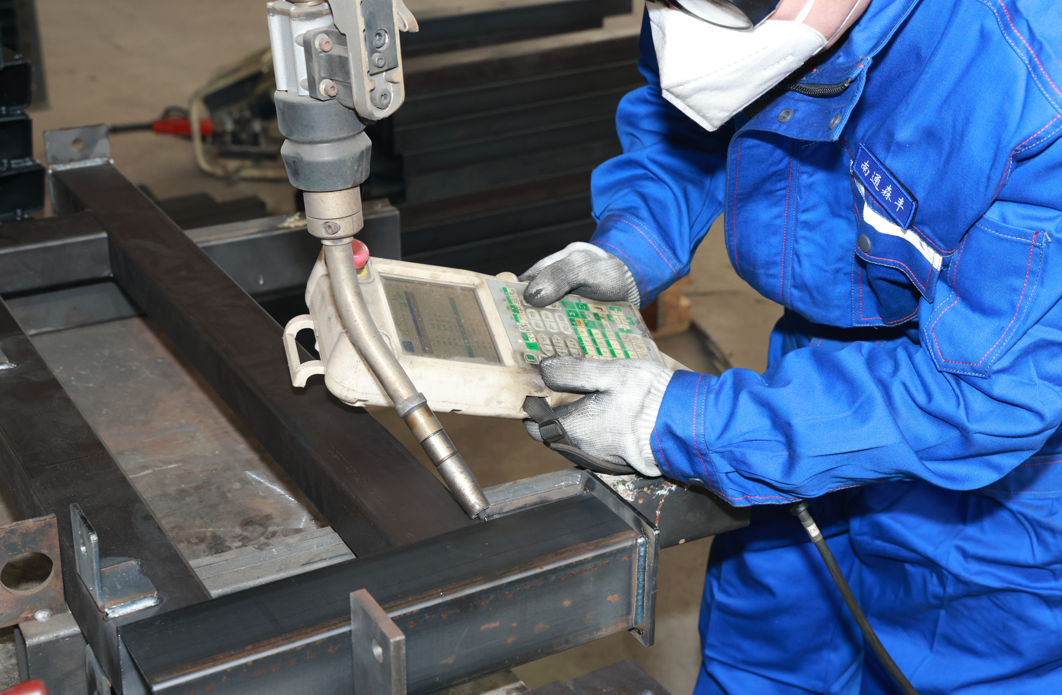
On the OEM side, a small trial run demands close checks. Inspect the weld beads on load-bearing joints. Confirm the tubing spec, for example a 75--75--3mm main frame on a rack, since wall thickness affects both safety and feel. Check the electrostatic powder coating for even coverage and adhesion. And insist on a pre-shipment report with photos before releasing the balance. A first OEM batch reveals whether the factory read the drawings correctly, so treat it as the audit it is.
These are not exotic requirements. They are the difference between a product that survives daily commercial use and one that returns as a warranty claim.
Closing: A Simple Way To Decide
The choice rarely needs a long spreadsheet. It usually comes down to a few honest checks.
- Look at how distinct the product must be. A near-standard rack that only needs a logo points toward ODM; a piece meant to define the brand points toward OEM.
- Weigh the cost of speed against the cost of control. Getting to market this quarter and owning the design outright pull in opposite directions.
- Read the factory before the design. A first small order tells more about weld quality, coating, and communication than any brochure.
A sensible path for many newcomers is to start with a small ODM trial, perhaps ten units, to test both the market and the factory, then shift to OEM once the direction firms up. That sequence keeps early risk low while leaving room to build something proprietary later.
Whether the plan calls for OEM gym equipment, ODM fitness equipment, or a staged move between the two, the practical next step is to specify the machine model and the customization items, then send those details across for a quote. A supplier used to both tracks can price and schedule accordingly. More product and factory information is available at https://senfengfitness.com/
Media Contact
Nantong Senfeng Sports Products Co., Ltd
+86 19514497849
Source :Nantong Senfeng Sports Products Co., Ltd
This article was originally published by IssueWire. Read the original article here.


YOUR NEWS, OUR NETWORK.
Do you have Great News you want to tell the world?
Be it updates about your business or your community, you can make sure that it’s heard by submitting your story to our network reaching hundreds of news sites across 6 verticals.